Eli Lilly.
A medicine company.
A small laboratory. A life-saving hormone. A century and a half of reinvention. The people, medicines, and difficult choices that made Lilly.
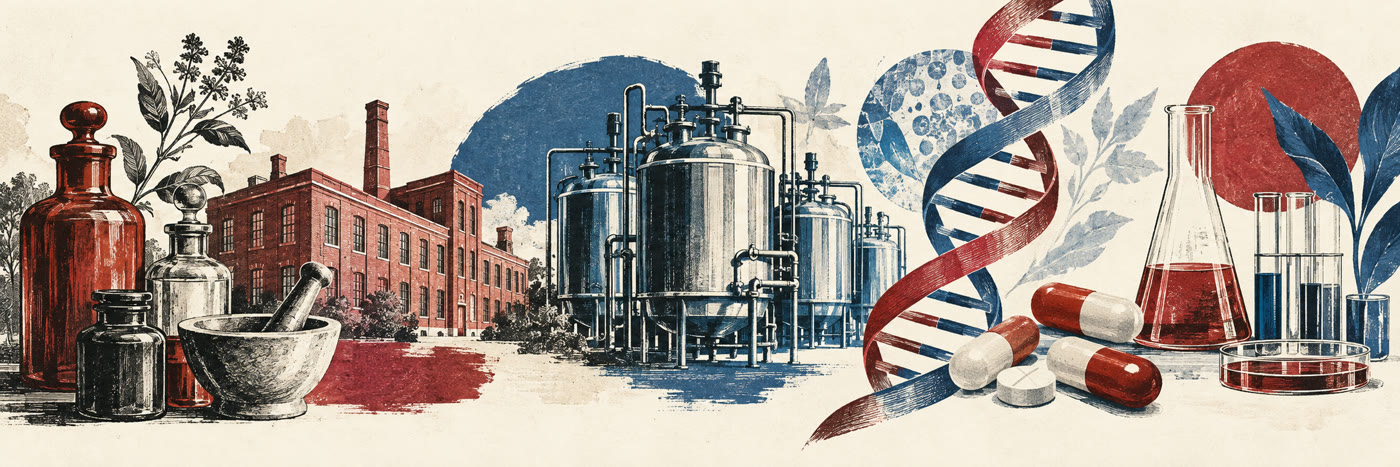
There are two ways to tell the story of a pharmaceutical company. One follows the names on the bottles. The other follows everything that has to happen before a bottle can reach a patient: a discovery, an experiment, a factory, a clinical trial, an approval, a prescription.
Lilly’s history lives in the distance between those two stories. Its medicines have changed what doctors can offer. Its manufacturing has helped turn scarce biological substances into repeatable products. Its controversies remind us that scientific achievement does not settle questions about evidence, promotion, or access.
This is a history of the company, rather than a catalogue of inevitable progress. Some discoveries became enduring treatments. Some promises failed. Each decade changed what it meant to be a medicine company.
One company.
Sixteen decades.
Follow the thread from an Indianapolis pharmacy to modern biotechnology. Select a decade to enter the story.
Before the company,
there was a pharmacist.
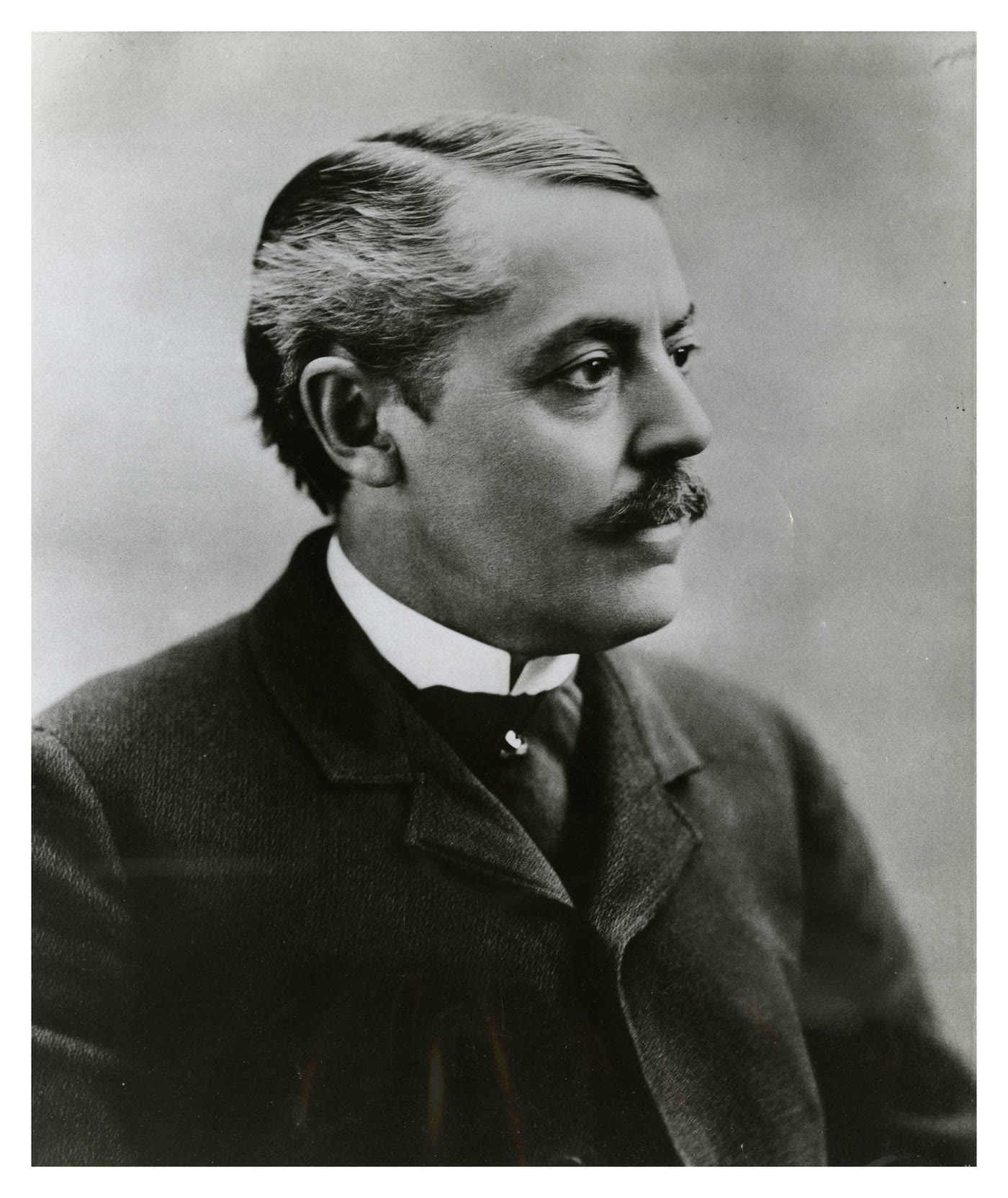
Colonel Eli Lilly opened his Indianapolis business in 1876. A pharmacist and Civil War veteran, he brought a practical ambition to a trade still crowded with remedies of uncertain quality: make dependable medicines.
The distinction matters. The founder did not begin with insulin, a biotechnology platform, or a blockbuster. He began with the work of preparing medicines and building confidence in what a customer received. His name became the company’s identity; the harder task was making that identity mean something from one batch to the next.
The modern story can make the outcome seem predetermined. At the beginning, it was a small business in a particular city, facing a much older question: why should anyone trust what is inside the bottle?
Source: Indiana’s biography of Colonel Lilly ↗Make quality
a repeatable practice.
In 1886, Lilly hired a full-time scientist to strengthen the evaluation of its medicines. This was an early move toward making scientific work part of the business itself.
A pharmacist can prepare a remedy carefully. A growing manufacturer has a different problem: how to make that care survive greater volume. Testing, measurement, and technical expertise become essential when the person who makes a medicine is no longer the person who hands it to a patient.
This is one of the quiet themes that runs through Lilly’s history. Research is not only the dramatic moment when a new substance is discovered. It is also the patient work of checking whether a process can be trusted.
Source: Lilly’s archived heritage account ↗A company has to
outlive its founder.
Eli Lilly died in 1898. His death marks a useful dividing line in the story: the life of the man and the life of the company are no longer the same narrative.
Every business built around a founder eventually encounters this test. Personal standards have to become organizational habits. A reputation has to survive decisions made by people who did not create it. Later generations inherit a name, but they still have to decide what to do with it.
For the reader following Lilly across the twentieth century, that distinction is essential. “Lilly” will increasingly mean chemists, physicians, technicians, factory workers, partners, and patients—not just the individual whose surname appears on the label.
Source: Indiana’s biography of Colonel Lilly ↗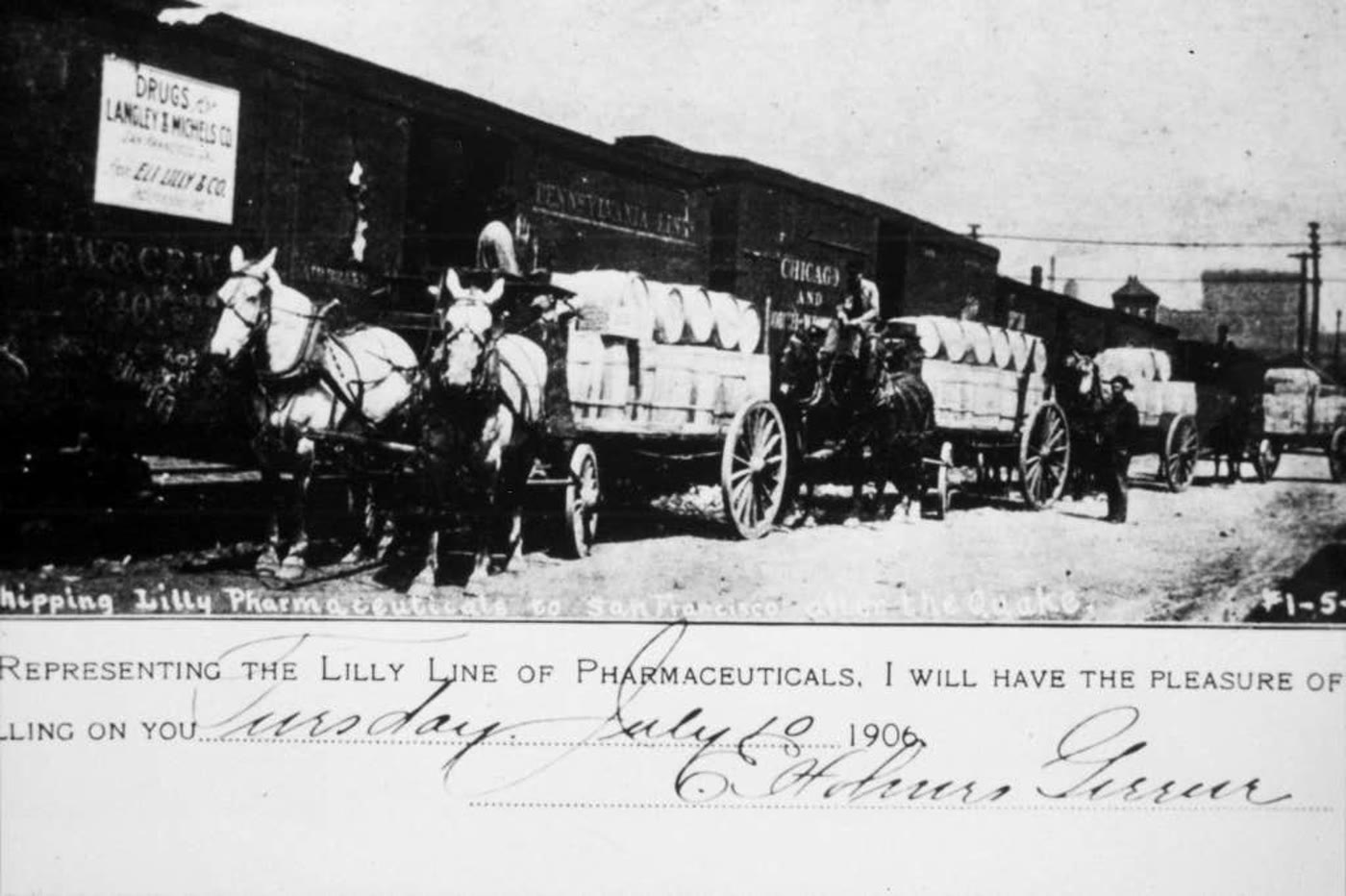
The last mile
was always part of it.
After the 1906 San Francisco earthquake, Lilly replaced lost pharmaceutical supplies without charge. The episode offers a different view of a medicine business: one defined by distribution and response as well as production.
A treatment has little value to someone who cannot obtain it. The route from a manufacturing site to a damaged city makes that fact visible. Across this history, the means of transport and the sophistication of the products will change. The need for reliable delivery will not.
Source: Lilly’s historical timeline ↗A wider responsibility.
In 1917, Lilly partnered with the American Red Cross on a field hospital in France staffed by Indiana personnel. The war placed medicine inside a vast logistical challenge.
That setting helps explain why histories of pharmaceuticals cannot stay inside the laboratory. A discovery needs trained people, equipment, transport, and institutions capable of putting it to use. A wartime hospital brings all those dependencies together in one place.
The next decade would produce a different emergency: patients waiting for a newly discovered hormone that could not yet be manufactured in sufficient quantities.
Source: Lilly’s historical timeline ↗A discovery in Toronto.
A challenge in Indianapolis.
The insulin breakthrough belonged to a team. Frederick Banting, Charles Best, J. J. R. Macleod, and James Collip helped turn an elusive pancreatic secretion into a treatment. Early patient results were extraordinary. Producing a consistent supply was another problem.
Toronto and Lilly began collaborating in 1922. Lilly chemist George Walden developed a purification method that helped make production more reliable. Iletin reached general distribution in 1923.
This is the moment that makes the company’s history larger than a sequence of products. A laboratory result could change the outlook for a patient. A manufacturing process could make that result available again tomorrow—and to the next patient, and the next.
Source: American Chemical Society, insulin development ↗Discover
Identify a biological effect.
Purify
Make a consistent preparation.
Produce
Turn a scarce extract into supply.
Deliver
Reach the people who need it.
The breakthrough was a medicine.
The next breakthrough was making enough.
Insulin did not cure diabetes. It changed what living with the disease could mean. That difference matters: a person dependent on insulin needs continuity, not a single successful experiment. The company’s achievement and the patient’s continuing dependence belong in the same story.
Source: ACS, insulin development ↗Two institutions,
one family name.
The Lilly family established Lilly Endowment in 1937. The philanthropic institution and the pharmaceutical company are distinct organizations; the shared name should not obscure that difference.
This chapter widens the lens from medicines to the institutions that business wealth can support. When following a company across generations, it is easy to collapse its owners, its employees, and its surrounding civic life into one story. Keeping them separate makes the history more precise.
Source: Lilly’s historical timeline ↗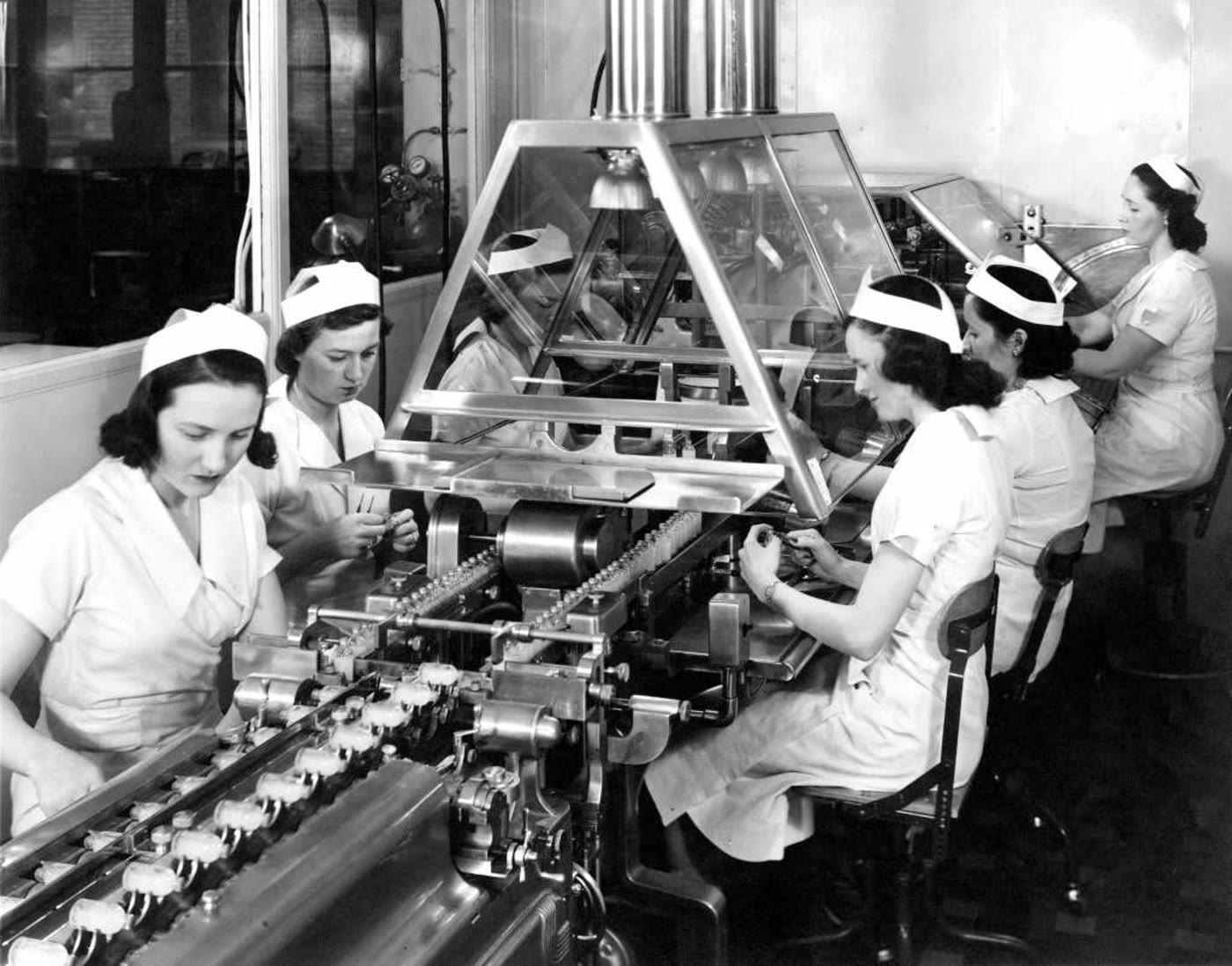
The factory becomes
part of the discovery.
Penicillin required a collective industrial effort. British researchers, American government laboratories, and companies including Lilly, Merck, Squibb, and Pfizer worked on the problems that separated an unstable laboratory material from a widely available antibiotic.
Fermentation was only part of the challenge. The drug also had to survive extraction, purification, and packaging. Lilly contributed to work on producing different penicillins by changing the substances fed to the mold.
This was not one company’s isolated triumph. It was an example of medicine advancing through shared scientific knowledge and competing industrial capabilities. The factory floor belongs in the photograph because it belongs in the explanation.
Source: ACS, discovery and development of penicillin ↗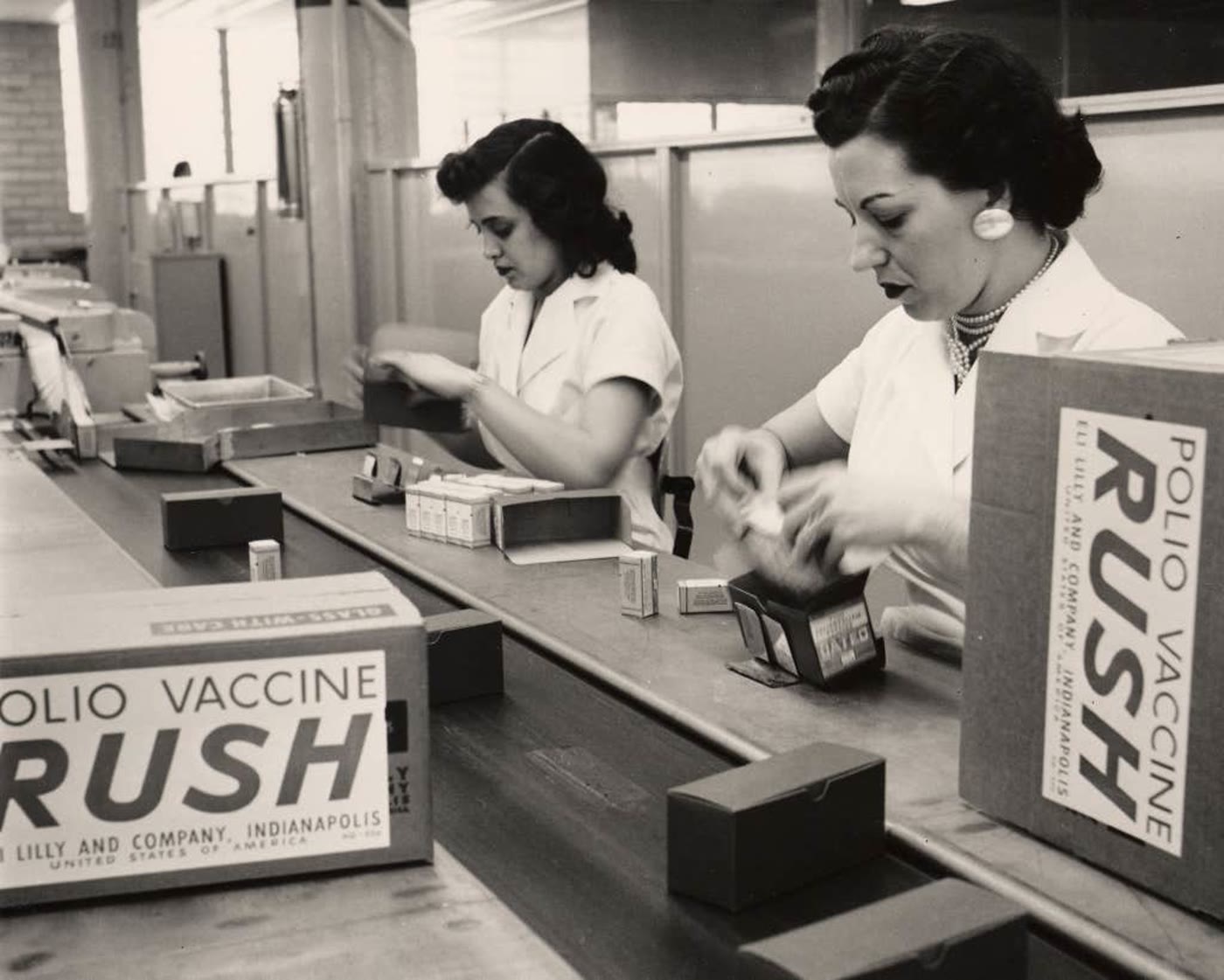
From treating illness
to preventing it.
Lilly manufactured the Salk polio vaccine in 1955 and introduced the antibiotic vancomycin in 1958. Prevention and treatment posed different scientific questions, but both demanded dependable production.
The photograph above is a useful counterweight to the familiar image of a lone scientist. Packing and shipping do not look like discovery. Yet the practical impact of a vaccine depends on them. Medicine becomes a public-health achievement only when many ordinary steps work together.
Source: Lilly’s historical timeline ↗New diseases.
New kinds of questions.
In 1961, Lilly introduced vinblastine, a cancer medicine derived from the Madagascar periwinkle. The company’s reach was extending beyond the infectious-disease and insulin chapters that had shaped its earlier identity.
There is no single scientific method for building a diversified pharmaceutical company. A hormone, an antibiotic, and a plant-derived cancer drug can begin in different places. Their paths converge in the need to establish what a substance does, which patients it can help, and how it can be made consistently.
Source: Lilly’s historical timeline ↗A famous medicine
starts as a research problem.
The work behind Prozac involved Lilly researchers Ray Fuller, David Wong, and Bryan Molloy. Their investigation of neurotransmission and serotonin reuptake helped produce fluoxetine, the compound later sold under that name.
The history is a reminder that a launch date compresses years of work into a single point on a timeline. Before a drug has a recognizable brand, it has experimental results, competing hypotheses, and uncertain prospects.
The next decade would bring two different expressions of that patient work: a new way to manufacture human insulin and a medicine that became closely associated with the treatment of depression.
Source: Science History Institute, the researchers behind Prozac ↗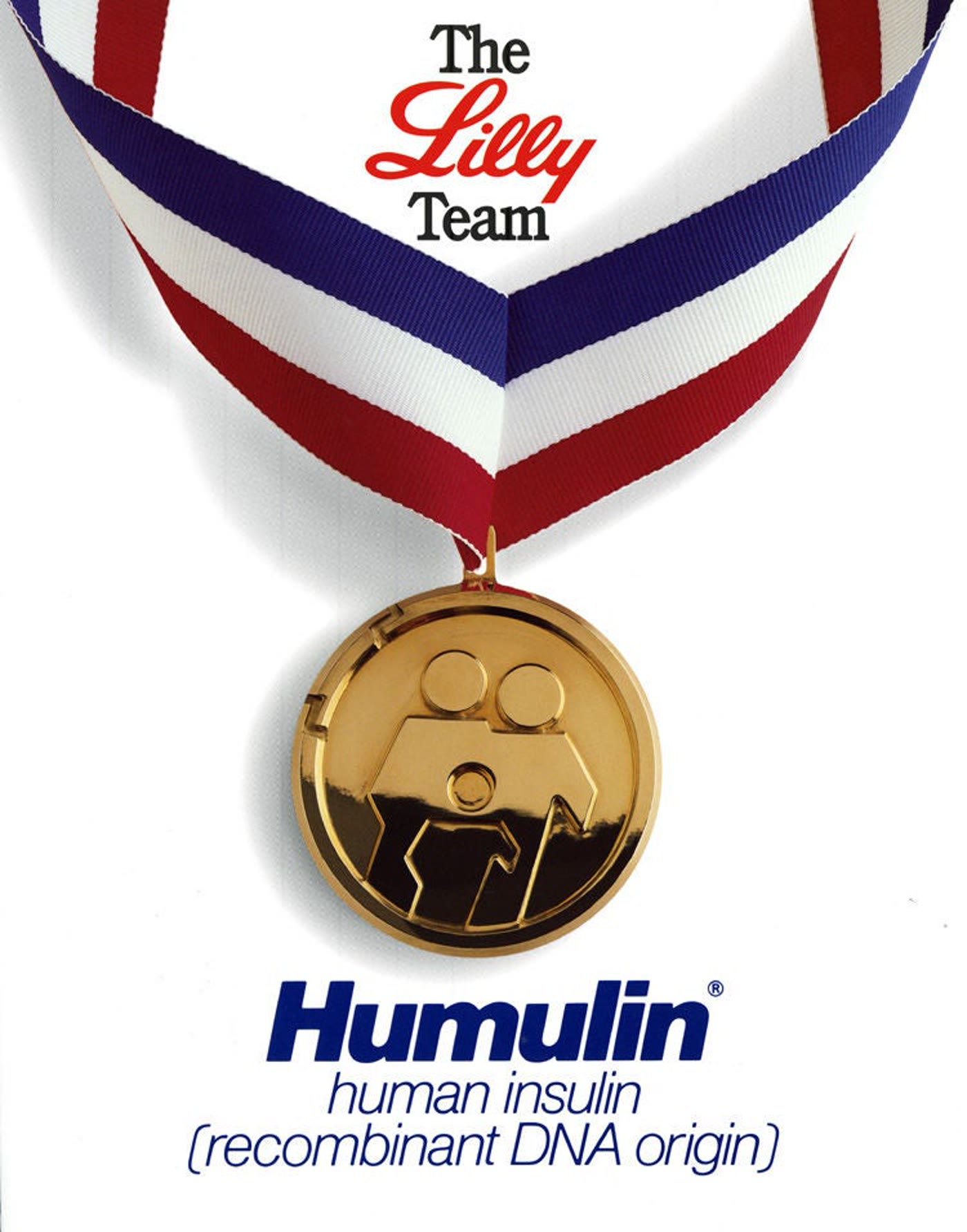
Learning to make
what the body makes.
On October 28, 1982, the FDA approved Humulin. The product emerged from recombinant-DNA research at City of Hope and Genentech and a commercialization agreement with Lilly. Human insulin could now be produced using engineered microorganisms.
The change addressed a fundamental constraint of the earlier insulin business: dependence on animal tissue. It also helped demonstrate that biotechnology could become a regulated medical product, rather than remain a promising laboratory technique.
Humulin connects two eras of Lilly. The company was still making an essential hormone; the way it made that hormone had changed profoundly.
Source: FDA’s history of biosynthetic insulin ↗The medicines of the 1980s
Selected first U.S. approvals · open a medicine for context and its source.
HumulinDiabetes
Human insulin. The FDA approved biosynthetic human insulin on October 28, 1982. Recombinant-DNA manufacturing reduced dependence on animal-derived insulin.
Approval history & evidence ↗HumatropeGrowth hormone deficiency
Somatropin. Recombinant human growth hormone. Its initial use addressed growth failure in children with inadequate growth hormone secretion; later indications expanded.
Approval history & evidence ↗ProzacDepression
Fluoxetine. FDA approval came in December 1987; U.S. commercial introduction followed in 1988. An SSRI, with additional indications developed later.
Approval history & evidence ↗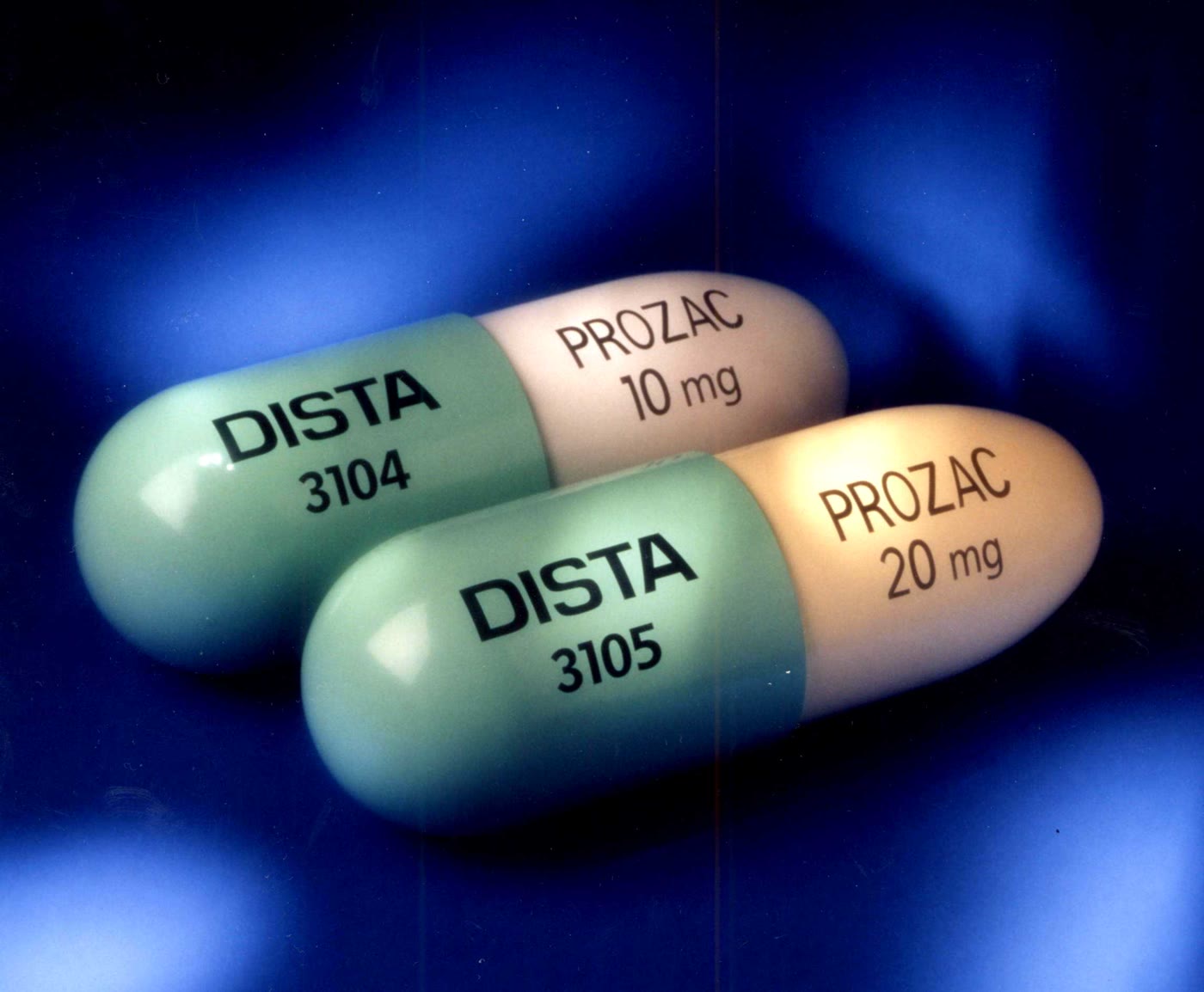
The arrival of Prozac
Fluoxetine received FDA approval in December 1987. Its U.S. introduction followed in 1988. Keeping those dates separate is important: approval and commercial launch are different events.
Its mechanism—selectively inhibiting serotonin reuptake—made it part of the SSRI class. But the meaning of a medicine is not exhausted by its mechanism. The history of Prozac also raises questions about how patients, doctors, and the public understand psychiatric illness.
It is tempting to let a famous brand stand for a whole decade. Humulin and Humatrope tell a parallel story: the 1980s also established new ways to manufacture human proteins.
Source: Classics in Chemical Neuroscience: Fluoxetine ↗What comes
after a breakthrough?
The 1990s brought a group of important approvals across diabetes, oncology, psychiatry, and bone health. Read together, they show why a company’s future cannot be understood through a single medicine.
Humalog, approved in 1996, extended the insulin story into a rapid-acting analog. Altering insulin’s behavior offered a different route to progress from simply reproducing the human hormone. The scientific question had moved from how to make insulin to how to adapt its action.
Source: FDA, Humalog approval record ↗Zyprexa and Gemzar arrived in the same year, but addressed very different clinical needs. Evista followed in 1997. Their shared corporate home should not make their evidence, risks, or uses interchangeable.
The medicines of the 1990s
Selected first U.S. approvals · indications below describe the original approval context.
GemzarPancreatic cancer
Gemcitabine. Gemcitabine entered U.S. practice for pancreatic cancer. Later approvals added other cancer settings; those are separate milestones.
Approval history & evidence ↗HumalogDiabetes
Insulin lispro. A rapid-acting insulin analog. It extended Lilly’s insulin history from producing the human hormone to modifying its absorption profile.
Approval history & evidence ↗ZyprexaPsychotic disorders
Olanzapine. The original approval addressed manifestations of psychotic disorders. Subsequent approvals included bipolar indications. The later marketing case is discussed below.
Approval history & evidence ↗EvistaOsteoporosis prevention
Raloxifene. Initially approved to prevent osteoporosis in postmenopausal women. Treatment and breast-cancer risk-reduction indications came later.
Approval history & evidence ↗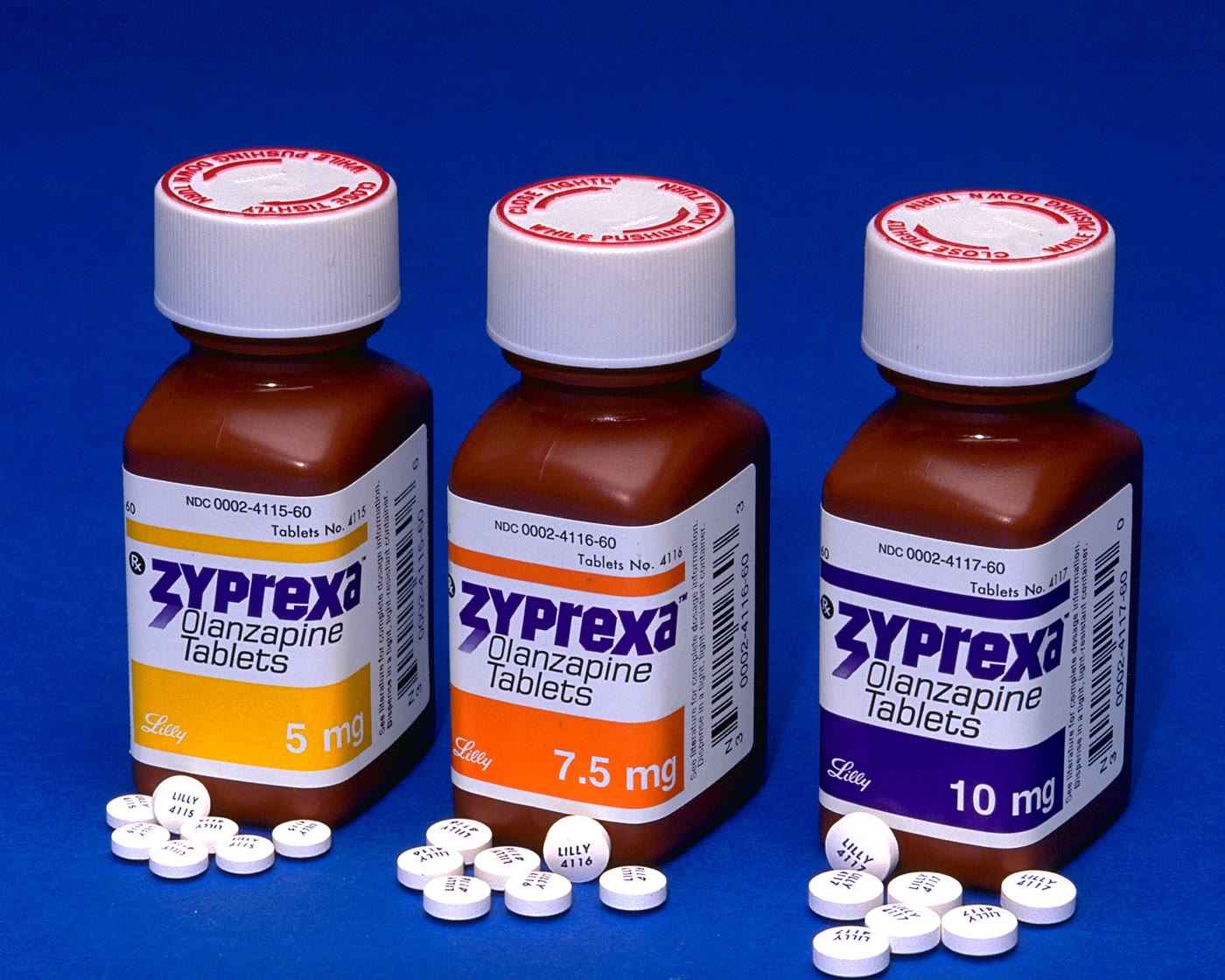
Evista illustrates the need to read a drug’s history in stages. Its initial approval concerned prevention of postmenopausal osteoporosis; subsequent uses expanded. A current label is a record of accumulated decisions, not necessarily a snapshot of what was approved on day one.
A good timeline therefore needs more than a date and a product name. It needs to explain which decision that date represents.
Source: Evista prescribing information ↗Success comes
with an expiration date.
In August 2001, the FDA approved generic fluoxetine applications that were ready for approval. For a branded pharmaceutical business, the arrival of generics changes the commercial life of a medicine. The scientific contribution remains; the period of protected competition does not.
The 2000s can be read as a test of renewal. A company has to keep financing uncertain research while existing products move through their own life cycles. New approvals are the visible milestones. Behind them lie years of work that began before the previous success had ended.
Source: FDA, fluoxetine administrative record ↗The medicines of the 2000s
Selected first U.S. approvals · including a later withdrawal.
XigrisSevere sepsis
Drotrecogin alfa (activated). Approved for selected adults with severe sepsis at high risk of death. Withdrawn in 2011 after a subsequent study did not demonstrate a survival benefit.
Approval history & evidence ↗ForteoOsteoporosis
Teriparatide. Forteo received FDA approval on November 26, 2002 for osteoporosis in patients at high fracture risk. It stimulates new bone formation.
Approval history & evidence ↗StratteraADHD
Atomoxetine. A nonstimulant medicine for attention-deficit/hyperactivity disorder. Its approach centers on norepinephrine reuptake inhibition.
Approval history & evidence ↗CialisErectile dysfunction
Tadalafil. Developed through the Lilly ICOS partnership. The original U.S. approval was for erectile dysfunction; other uses and dosing options followed.
Approval history & evidence ↗AlimtaMalignant pleural mesothelioma
Pemetrexed. Initially approved with cisplatin for malignant pleural mesothelioma. Additional lung-cancer indications followed.
Approval history & evidence ↗CymbaltaDepression; diabetic nerve pain
Duloxetine. Initial U.S. approval in 2004, with major depressive disorder and diabetic peripheral neuropathic pain approvals that year. Additional indications followed.
Approval history & evidence ↗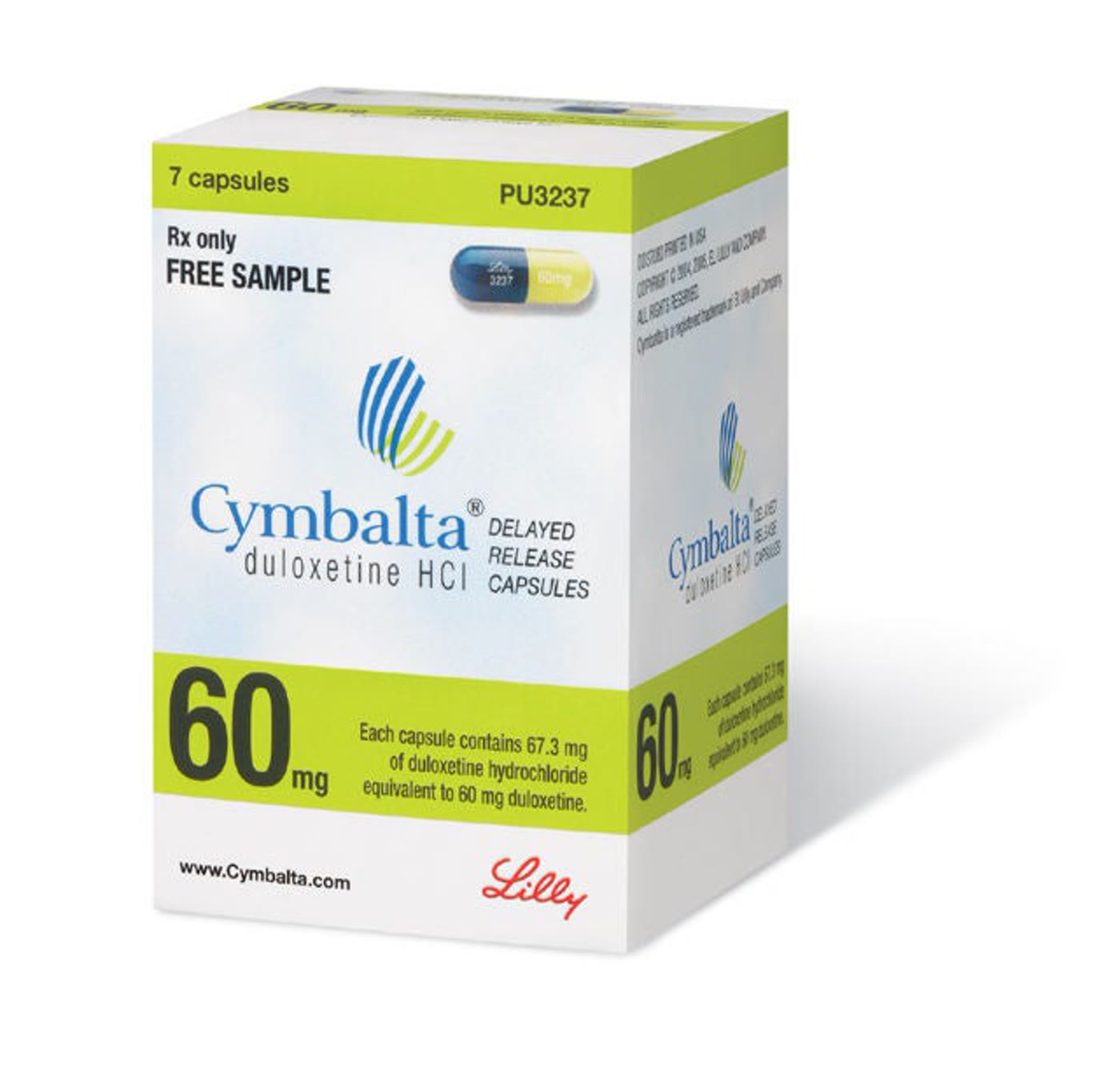
Several paths to renewal
Cymbalta brought duloxetine, a serotonin and norepinephrine reuptake inhibitor, into the portfolio in 2004. Its history would span psychiatric and pain indications. Those uses developed over time and should not be collapsed into one launch event.
Alimta, also approved in 2004, followed a different scientific route: an antifolate cancer therapy. Strattera brought a nonstimulant approach to ADHD, while Forteo’s osteoporosis treatment stimulated bone formation. Cialis emerged from the Lilly ICOS partnership.
These medicines show the breadth of the company’s work without implying that all products came from the same laboratory, had the same development history, or met the same clinical need.
Cymbalta label ↗ Alimta label ↗Approval is a milestone.
It is not the end of the evidence.
In 2011, Lilly withdrew Xigris after a trial failed to demonstrate a survival benefit in patients with septic shock. The medicine had been approved in 2001 for selected adults with severe sepsis at high risk of death.
That reversal is an important part of an honest timeline. Medicines are evaluated with the evidence available at a particular time. Later studies can change the judgment. A history that lists only approvals would miss this movement.
Source: Lilly’s Xigris withdrawal announcement ↗The decade also brought Trulicity in 2014 and Verzenio in 2017. Dulaglutide expanded Lilly’s work in type 2 diabetes through GLP-1 receptor agonism. Abemaciclib brought a targeted approach to certain breast cancers through inhibition of CDK4 and CDK6.
Both point toward the next chapter: a portfolio organized around biological mechanisms, with clinical evidence defining the people for whom each medicine is appropriate.
Trulicity label ↗ Verzenio label ↗
A new chapter
in metabolic medicine.
The FDA approved Mounjaro in May 2022 for type 2 diabetes and Zepbound in November 2023 for chronic weight management in eligible adults. Both contain tirzepatide, which acts at GIP and GLP-1 receptors.
These are distinct product approvals for the same active ingredient. Counting them as two unrelated molecular discoveries would distort the history. Their importance lies in the clinical evidence and uses behind each decision.
FDA: Mounjaro ↗ FDA: Zepbound ↗Mounjaro
Tirzepatide · type 2 diabetes
Zepbound
Tirzepatide · chronic weight management
Kisunla
Donanemab · Alzheimer’s disease
Foundayo
Orforglipron · oral GLP-1 medicine for weight management
In July 2024, the FDA approved Kisunla for Alzheimer’s disease, with treatment initiated in the mild cognitive impairment or mild dementia stage studied in clinical trials. Its benefits and risks make patient selection and monitoring central to the story.
Source: FDA, Kisunla clinical evidence ↗In April 2026, the FDA approved Foundayo, orforglipron, an oral GLP-1 medicine for weight management. The development extends the metabolic-medicine chapter from injectable treatments to a small-molecule pill.
Source: FDA announcement, April 1, 2026 ↗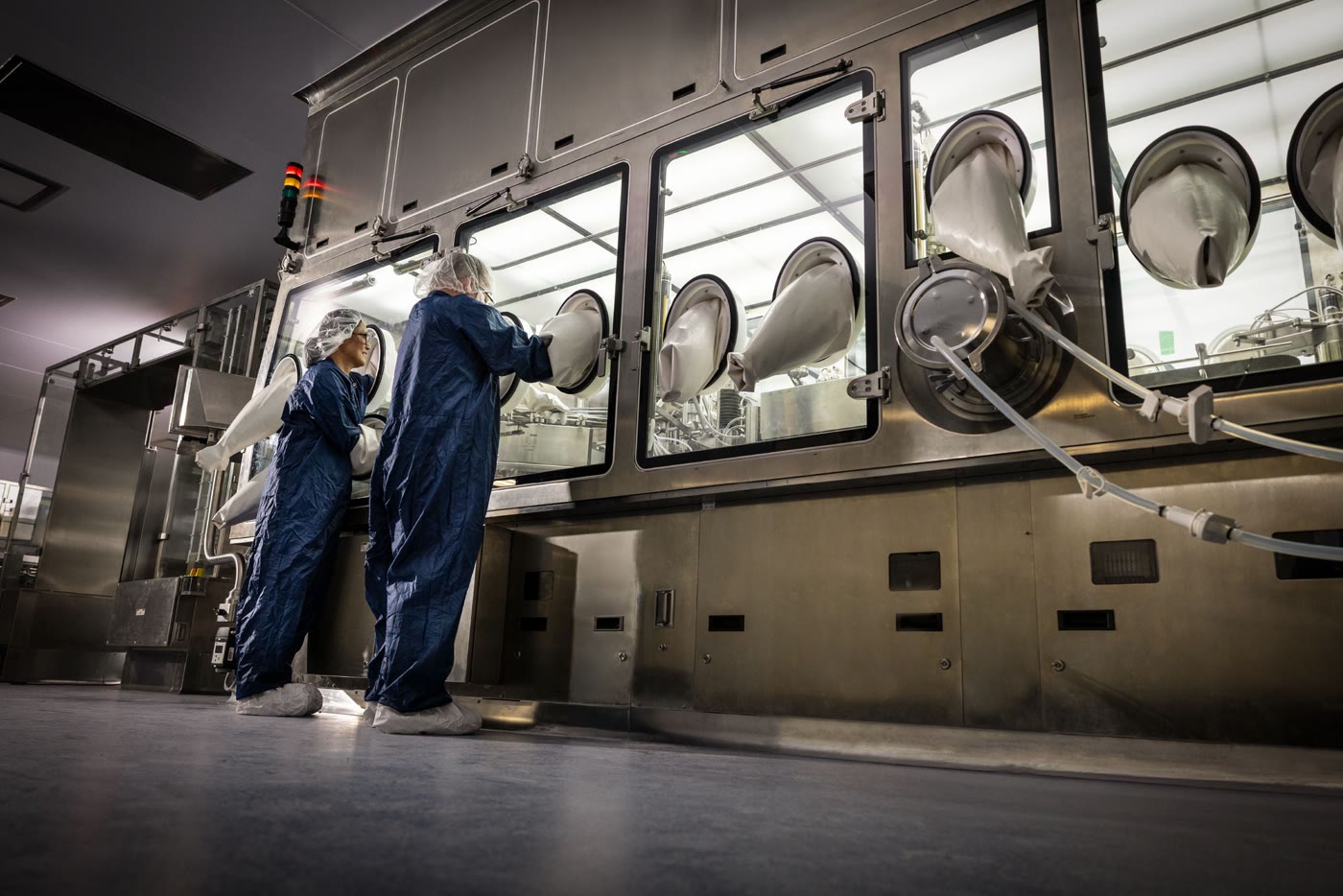
The science changes.
The central question remains.
How does a discovery
become a medicine
people can actually reach?
That question connects the early laboratory to the insulin factory, the antibiotic production line, and the modern clinical trial. It also keeps the company’s achievements in proportion. A medicine’s value is experienced by a person; the systems around it determine whether that person can benefit.
Lilly’s history is still being written. The next chapter will depend on discoveries that work, evidence that holds up, manufacturing that can meet demand, and decisions about access that reach beyond the laboratory.
Go back to
the beginning.
Listen to Good Pharma’s Eli Lilly, Part 1.
Episode, research notes & transcript ↗About this story
This independently written historical companion draws on the primary records and historical accounts linked throughout. It is not a transcript of the podcast. The approval timeline is a selection of important Lilly medicines, not an exhaustive regulatory inventory. Dates refer to first U.S. product approvals unless stated otherwise; launch dates, expanded indications, and withdrawals are distinguished in the text.
Historical images and product photography: Eli Lilly and Company, with source links in each caption. The opening illustration is AI-assisted editorial artwork and does not depict a specific historical building or production process. Product names identify historical subjects; this page is not affiliated with Eli Lilly and Company.
Updated September 28, 2026.